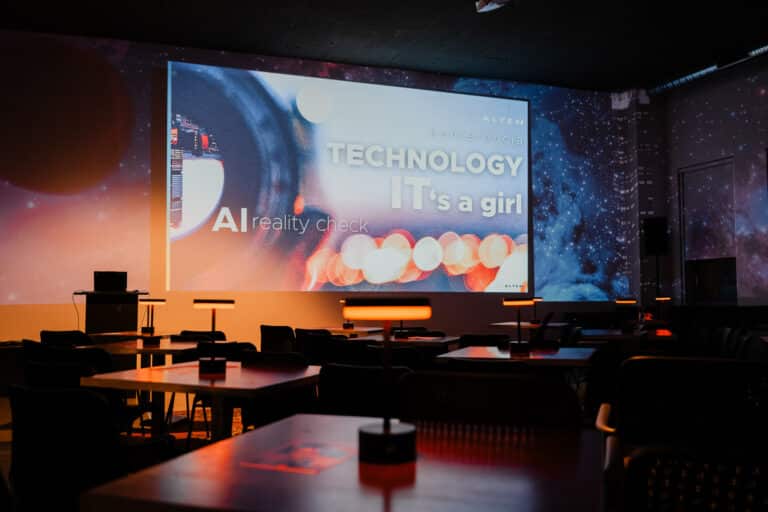
AI: REALITY CHECK
Conference: Technology? IT’s a girl! 2026
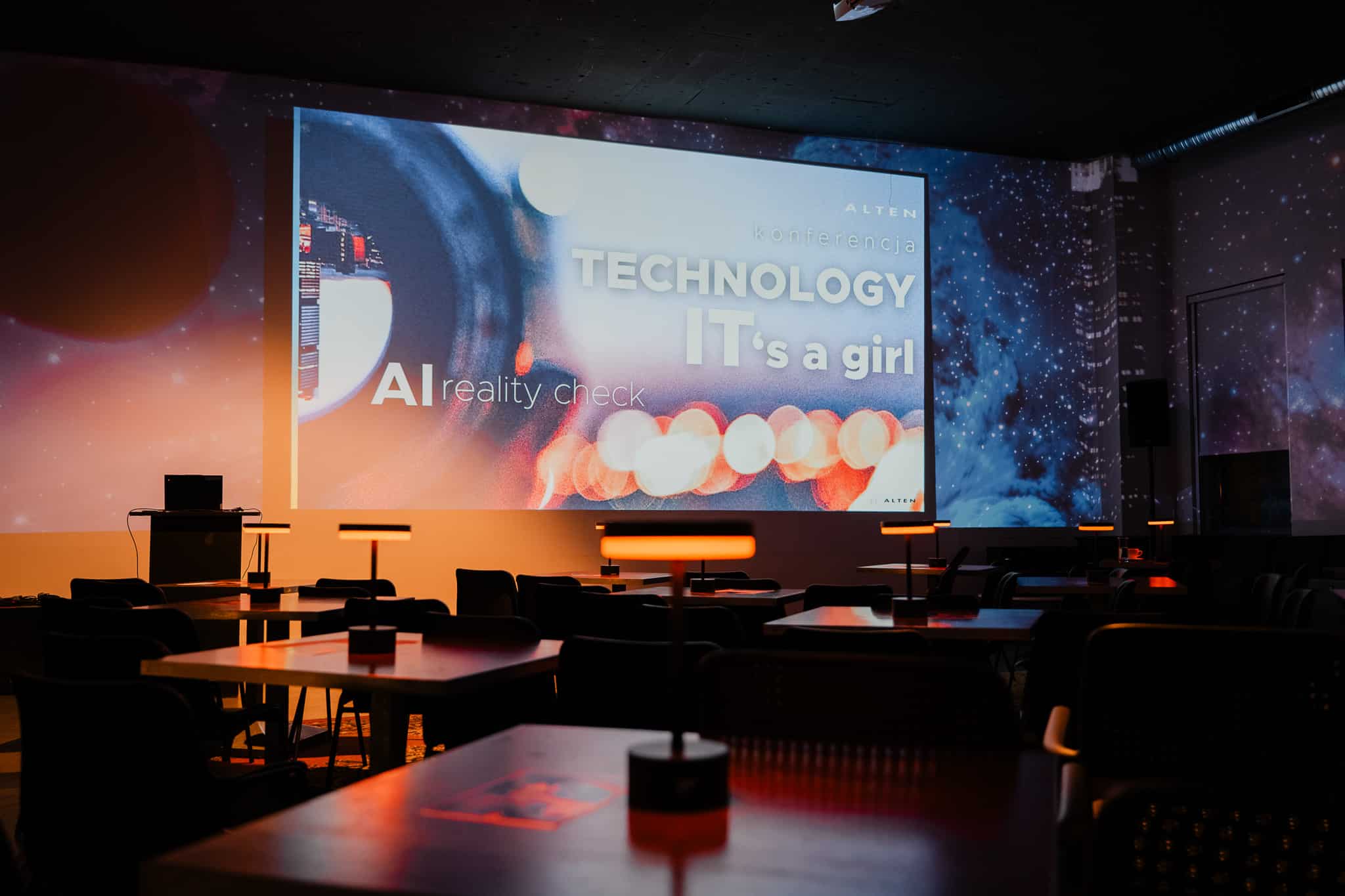
On November 19, the third edition of the Technology? It’s a Girl! conference, organized by ALTEN Poland, took place at HEVRE in Kraków. The event series was created as a space for conversations about technology, innovation, and the future of the industry, bringing together diverse perspectives and fostering dialogue between business, academia, and the world of emerging technologies.
Practice, responsibility, and the future of artificial intelligence
This year’s edition was held under the theme “AI: Reality Check.” Four years after the release of ChatGPT, artificial intelligence is no longer a futuristic curiosity. It has become a tool integrated into the daily operations of many organizations. That is why, during this event, we chose to look at AI beyond the marketing hype and polarized opinions. Instead of asking whether artificial intelligence will change the world, we focused on how it is already transforming the way we work, make decisions, and drive business growth.
The audience was welcomed by Ewa Gumula, Managing Director of ALTEN Poland, who emphasized the importance of women actively participating in technology and business. She highlighted the unique moment we are experiencing today. Advances in artificial intelligence and digital technologies create opportunities not only to observe change, but also to shape it. She encouraged participants to embrace new challenges, continuously develop their skills, and actively influence the direction of modern technology. She also stressed that diversity of perspectives remains one of the key drivers of innovation and business success.
AI needs more than algorithms
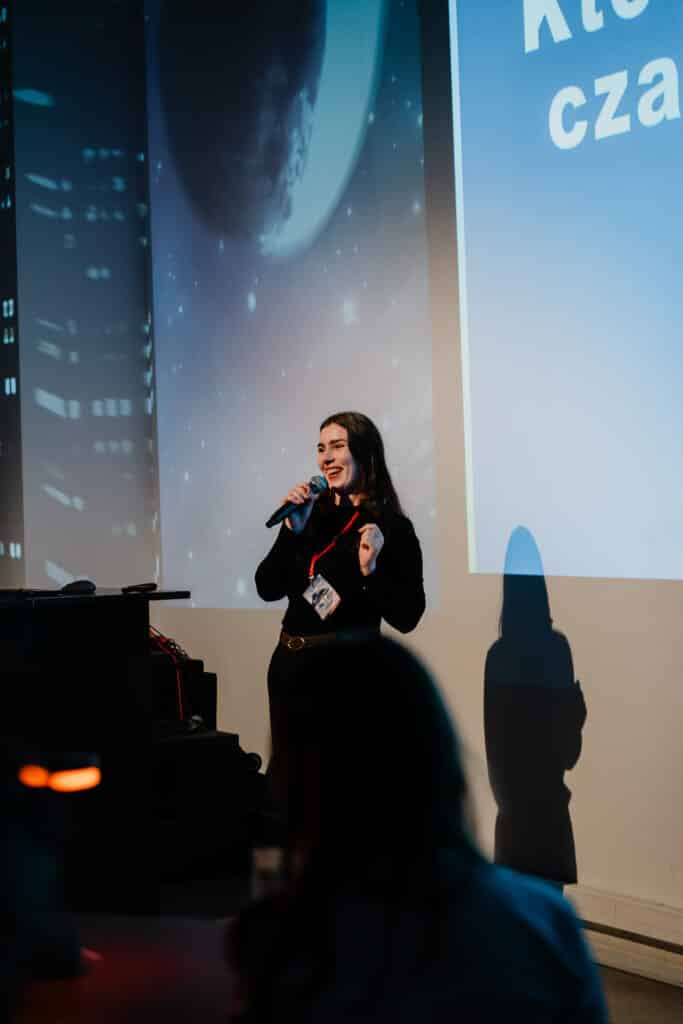
The first presentation was delivered by Patrycja Dąbrowska-Wierzbicka from the Academic Computer Centre Cyfronet AGH, who introduced the audience to the concept of AI Factories and the infrastructure required to develop artificial intelligence.
While discussions about AI often focus on models and applications, their operation relies on substantial computing resources, access to data, and specialized expertise. The speaker explained the role of European AI Factories, which aim to provide companies, startups, and research institutions with access to modern infrastructure that supports the development and deployment of artificial intelligence solutions.
Particularly insightful was the discussion about Poland’s role within the European AI ecosystem. Participants learned more about LUMI, one of Europe’s most powerful supercomputers, which is used for training AI models as well as conducting advanced scientific research.
The presentation also highlighted less obvious aspects of AI development. As demand for computing power continues to grow, so does energy consumption and the environmental footprint of technological infrastructure. Therefore, discussions about the future of artificial intelligence should not focus solely on opportunities and innovation. They must also address the costs and responsibilities associated with maintaining and expanding the infrastructure that powers these technologies.
Design in the age of generative AI
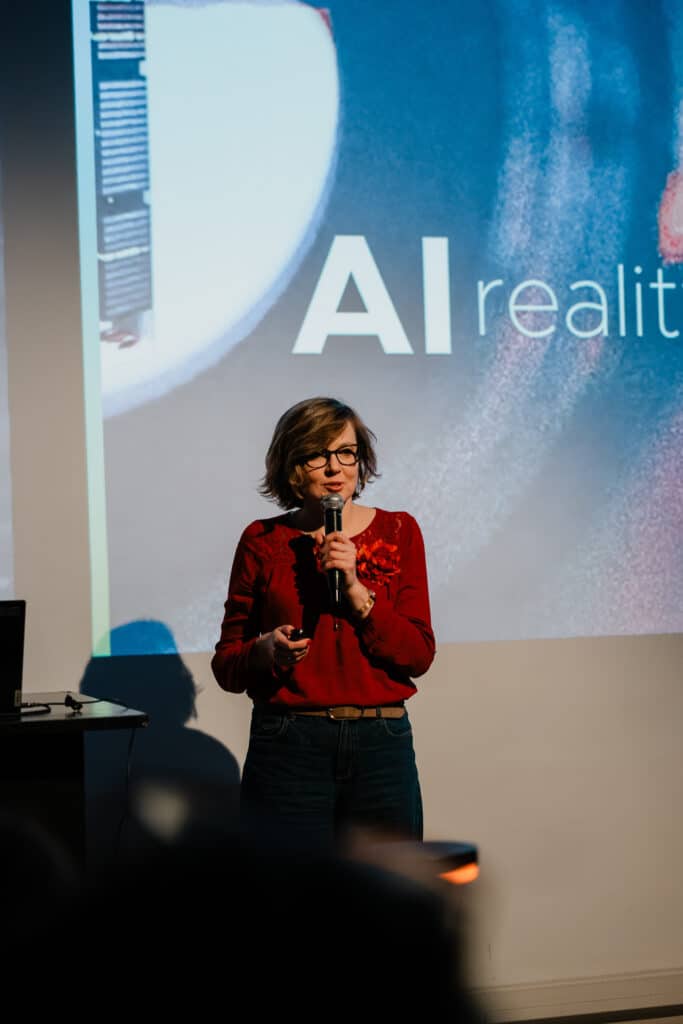
The next presentation, given by Natalia Bargieł from ALTEN Poland, explored the role of designers in a world increasingly shaped by generative artificial intelligence.
The speaker addressed the phenomenon known as AI slop: the growing volume of low-quality content generated by AI systems. Although AI-powered tools can significantly accelerate many stages of the design process, their widespread availability does not automatically guarantee high-quality outcomes.
At the heart of the presentation was the question of responsibility. Natalia Bargieł emphasized that AI can provide valuable support throughout the design process, but humans remain responsible for understanding user needs, making informed decisions, and evaluating the quality of the solutions they create. In a world where more and more content is generated automatically, critical thinking and intentional design are becoming more important than ever.
From idea to prototype
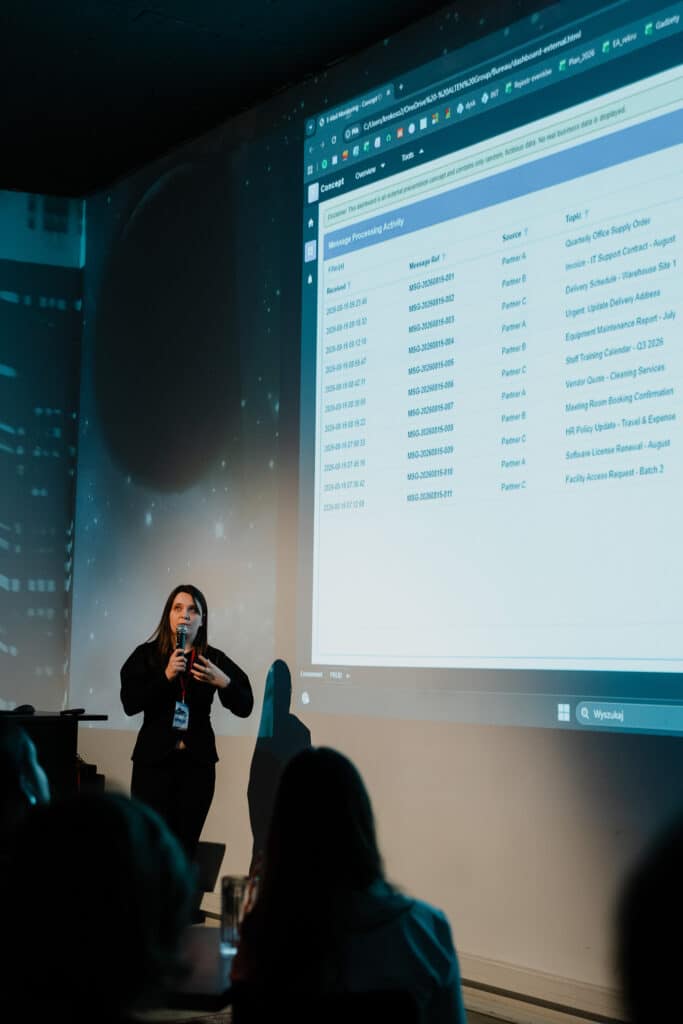
Patrycja Dec from BNP Paribas approached artificial intelligence from the perspective of business analysis and digital product development.
Her presentation demonstrated how AI tools can be used to rapidly build and validate ideas before launching a full-scale design and development process. Through practical examples, she showed how artificial intelligence can support prototyping, refine business requirements, and improve communication among project stakeholders.
The session also served as a reminder that successful adoption of AI is not solely about automating tasks. The real value emerges when technology helps organizations validate ideas faster, reduce risk, and make better business decisions.
The bright and dark sides of AI
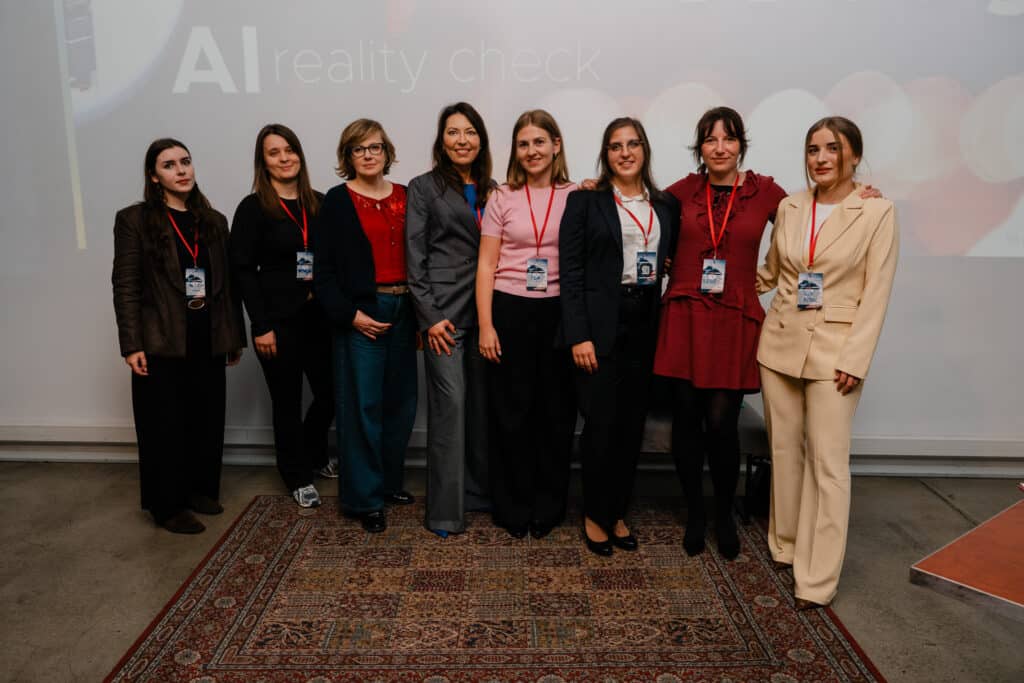
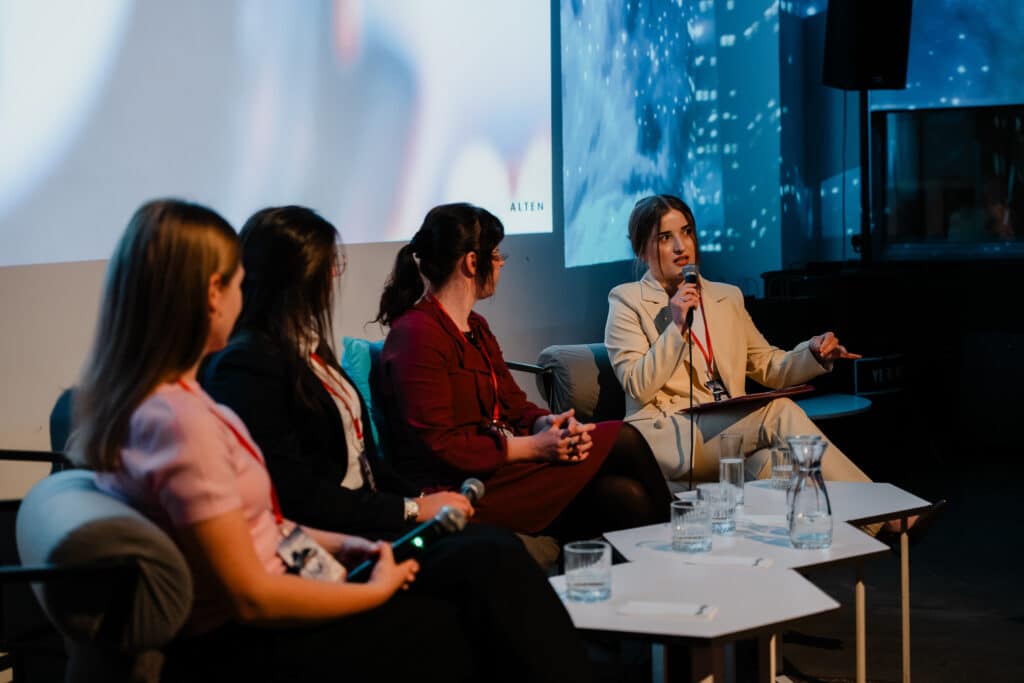
The event concluded with a panel discussion titled “The Bright and Dark Sides of AI”, featuring Aleksandra Goryczka (ALTEN Poland), Ida Szczyrbak (AGH University of Science and Technology), Weronika Wdowiak (Nordea), and Katarzyna Osuch-Bukowska (FedEx Dataworks Poland).
The discussion demonstrated how much our perception of artificial intelligence has evolved over the past few years. Enthusiasm surrounding the possibilities offered by new AI tools is increasingly giving way to more pragmatic questions about their actual business value, their impact on productivity, and the broader consequences of their use.
The panelists pointed to the growing volume of content and information generated by AI, which can paradoxically make work more difficult and contribute to cognitive overload. They also discussed the impact of AI on education and the development of future skills. In an era of instant access to answers, competencies such as critical thinking, information verification, adaptability, and effective interpersonal communication have become more valuable than ever.
The discussion also included practical examples of AI implementation. Panelists highlighted tools that support literature and report analysis, content summarization, meeting transcription, as well as business presentation and communication preparation.
Although the conversation covered many different perspectives, all panelists agreed on one key takeaway: there is no need to fear artificial intelligence, but there is also no reason to trust its outputs without question. AI can be an extremely effective support tool, provided that we do not abandon our own judgment, responsibility, and ability to think independently.
From fascination to conscious AI adoption
This year’s edition of Technology? It’s a Girl! demonstrated that conversations about artificial intelligence are becoming increasingly mature. Instead of asking whether AI will change the world, we are asking how to use it responsibly, effectively, and in ways that benefit people.
Perhaps this was the conference’s most important conclusion. Artificial intelligence does not relieve us of the responsibility to think critically. Quite the opposite. It requires greater awareness, a deeper understanding of technology, and a willingness to make informed and responsible decisions. In the end, that reality check proved to be the most valuable outcome of this year’s event.